President William Ruto (Main Address – Full Speech) of the 12th National and County Governments Coordinating Summit 10 December 2025
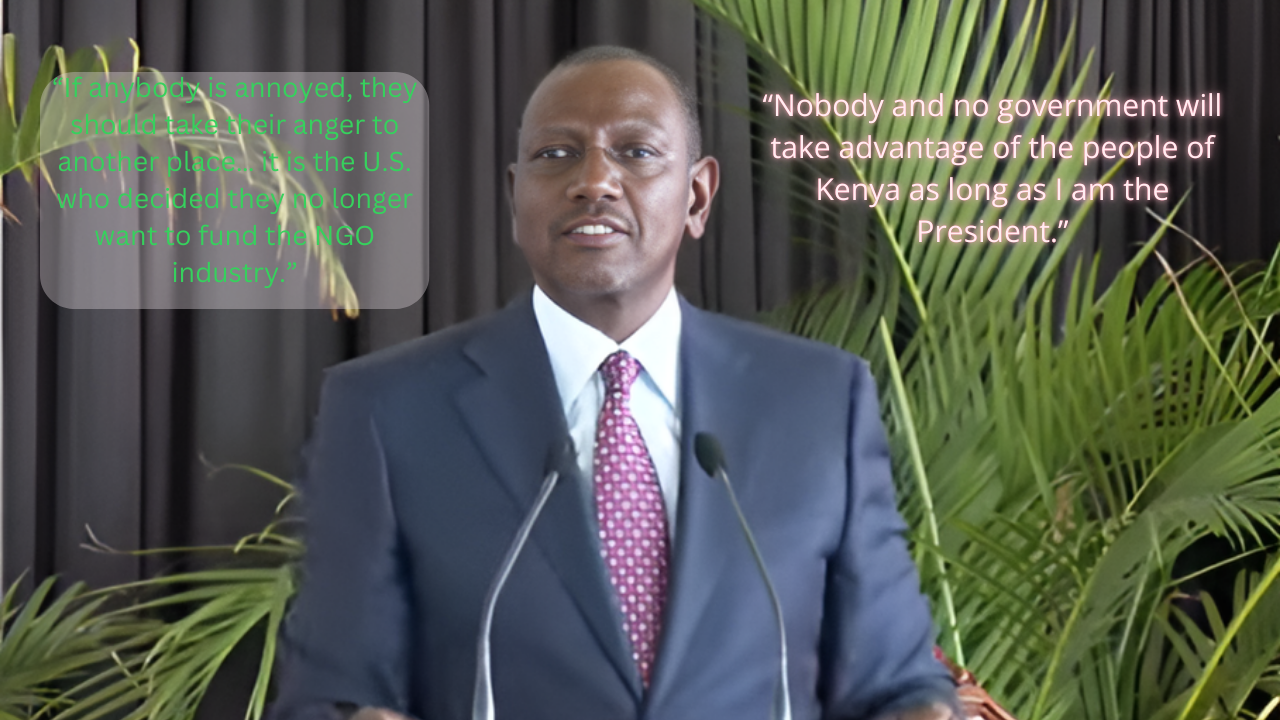
President William Ruto
Thank you very much, Mr Deputy President.
It is my pleasure to welcome all of you to this morning’s meeting, the 12th National and County Government Coordinating Summit. Each time we gather under this framework, we renew a commitment that lies at the heart of our constitutional order: the commitment to shared governance, inclusive prosperity and collective responsibility for the future of our nation.
Since the inaugural Summit, we have seen clearly and powerfully the transformation that happens when governments choose collaboration over confrontation and partnership over competition. Devolution has not only drawn the machinery of governance closer to the people, but it has also energised counties to become genuine engines of local development, centres of coordination and champions of responsive, people-centred service delivery.
Over the past year in particular, this Summit and the spirit of partnership has been evident across the country. Counties have stepped up assertively, strengthening healthcare delivery under the Social Health Authority reforms, expanding agricultural value chains, accelerating the establishment of county aggregation industrial parks, and adopting digital systems that have modernised planning, record-keeping and payments at the county level. I must congratulate all Governors and their staff for this great achievement.
These reforms are visible in our hospitals where supervision has improved; in farms and markets where farmers and traders now benefit from better infrastructure and coordinated support; in schools where collaborative programmes such as the transfer of school feeding initiatives and assets are enhancing enrolment and retention; and in households where citizens now interact with government more easily, efficiently, affordably and transparently.
For our part as a national government, we have stood shoulder-to-shoulder with counties. We have implemented fiscal and structural reforms that guarantee more predictable cash disbursements, strengthened monitoring of Summit resolutions and introduced collaborative systems of planning and reporting.
Most importantly, for the first time in our nation’s history, we have completed the full delineation, unbundling and gazetting of devolved functions through Gazette Notice No. 16472 to 16483.
This long-awaited clarification of roles, pending for nearly 12 years, finally removes historical ambiguities, duplication and institutional tensions that slowed service delivery and generated conflict over responsibility.
While significant progress has been achieved, I am aware that some functional areas remain unresolved or contested. The Intergovernmental Relations Technical Committee should therefore accelerate the clarification and determination of the unbundled functional components for transfer to the respective levels of government.
Ladies and gentlemen, I reaffirm that resources shall follow the transferred functions consistently and in good faith as mandated by our Constitution. In line with the gazetted functions, I am informed that IGRTC has in the interim identified resources for consideration in the 2026-2027 financial year for transfer to county governments.
I therefore call upon the Commission on Revenue Allocation and the National Treasury, using the tentative resource estimates identified by IGRTC to verify this information and finalize a definitive figure that will serve as the basis for financial transfer to counties in our next financial year.
While we await the full realisation of financial transfers, significant progress has already been made in the transfer of non-financial resources — specifically fixed and movable assets. ARDC has gazetted the transfer of more than 46,000 parcels of land and 8,062 housing units to county governments through Gazette Notice No. 171 of 11th August 2025 and No. 188 of 5th September 2025.
These assets are now under the custody and management of county governments. I urge counties to collaborate with the relevant agencies to facilitate the processing of legal ownership documents as required by law.
Additionally, 34,000 parcels of land and over 1,000 housing units are pending transfer across 40 counties. The IGRTC should fast-track this process to ensure that all attendant resources are transferred without any further delay.
A central mandate of this Summit is the assessment of devolution performance across both levels of government. The Secretariat is responsible for conducting these assessments and reporting recommendations to the Summit, including on recently transferred functions.
While I acknowledge the positive progress made, I remain concerned about our inability to fully execute the resolutions adopted at previous Summits. I urge our Secretariat to ensure full implementation of all resolutions and call upon all responsible parties to fulfil their mandates diligently and report progress promptly.
At the last two Summit meetings, a resolution was passed to review the Intergovernmental Relations Act to legally entrench the Council of Governors Secretariat and strengthen it. I understand the legislative process has stalled in Parliament.
I request the Speaker of the National Assembly to intervene in consultation with the Senate to resolve the challenges affecting the amendment Bill’s progress and ensure that intergovernmental relations institutions receive the legal support required to perform their functions effectively.
As we reflect on the commitments we have made to the people of Kenya, it is satisfying to observe the significant progress achieved in the last three years.
A cornerstone of our transformative agenda has been the housing programme that not only includes housing, but also includes construction of markets, institutional houses and also hostels for our students. A top priority of our administration’s agenda aimed at restoring dignity, fostering community development and enhancing long-term economic stability for families who have long desired to either own a home or operate a business in a decent place or for our students to live in dignified dwellings.
The success of this programme is rooted in partnership and shared vision. I extend my sincere appreciation to all the 47 county governments for their collaboration and support in making this national dream a reality.
I know I have talked with many governors at a very personal level on some of the issues that have come up and we have always found a way to resolve those issues to agree on how to facilitate the process and your contributions from land allocation and streamlined approval to logistical facilitation have been instrumental in accelerating progress across all our counties.
This level of cooperation demonstrates the power of unity, proving that when we work together, even the most ambitious goals are attainable.
We remain firmly committed to scaling up this programme to ensure that quality, sustainability and affordable homes are within reach of every deserving Kenyan family, thereby improving livelihoods and contributing to sustained national economic growth.
We have done the same on matters health and I must commend counties for what we see as significant developments, including progress in supervision, delivery of service, delivery of health commodities, personnel issues and an array of collaboration that has made it possible for us to be able to jointly deliver on health — a very primary and present agenda of this administration.
I know we will be having conversation on some of these issues as part of the main agenda.
Maybe I should also take this opportunity to assure all of us that we have managed to structure a relationship that is going to support our health delivery outcomes with the government of the United States.
And just to set the parameters correctly, the government of the United States is a solid partner of the government of Kenya. It is not a relationship that began recently. It is a relationship that has been built over time, a relationship that has been of mutual benefit to both the people of Kenya and the people of the United States.
And when President Biden invited me two years ago for a state visit — the first in after 18 years by an African head of state — it was a statement of confidence in the relationship between our two countries.
When President Donald Trump invited me also alongside other colleagues from our region last week, we did agree between the two governments that much as we were going to sign one of the most consequential agreements on peace and security in our region.
It was also necessary for us to further consolidate the relationship between the United States and Kenya by signing an agreement on matters health.
That agreement was a request by the government of Kenya because health is one of the big tickets that between the national government and the county governments we have been focusing on for the last three years.
And it is because many families, many people in Kenya have suffered a great deal. Many people — in fact estimates have put it at almost a million families every year sink into poverty and debt because of hospital bills.
And therefore it became a concern for us as citizenry in Kenya. It became a campaign matter for all parties in the last election and we have robustly and aggressively undertaken far-reaching reforms in that sector.
We did as a government request the United States to support us in this space and they acceded to our request and when I got the invitation, I did propose that maybe that was a good occasion to sign off on the agreement that we were discussing.
The government of the United States did send in officials from Washington to come to Kenya. We did undertake the negotiations and I must commend CS Duol and the teams at the Ministry of Health for working overtime with the support of the Office of the Attorney General to finalise on that agreement and to facilitate the signing of that agreement on my visit to the United States last week for the people of Kenya.
The United States is supporting Kenya with $1.6 billion which is just over 200 billion shillings over the next five years in the health sector — a sector they have been supporting for a long time.
In fact, the numbers show that the United States has spent $7 billion in Kenya on matters health over time.
Let me also say that this facility is not a loan facility. I have also been careful to make sure that the negotiations were clear.
If you followed the United States Secretary of State Marco Rubio did state clearly that we have working institutions in Kenya.
We did not become the first country to sign an agreement on health with the United States by default.
We became the first country by design because we have the requisite institutions and we have the requisite human capital with the capacity to undertake any negotiation.
I want to remind us and I have said this before and I will repeat it again. We have one of the best human capital anywhere in the world.
We have simply the best human capital anywhere in the world.
And therefore the professionals we have at the Ministry of Health, the public officials and professionals we have at the Attorney General’s Office are as good, if not better than those from anywhere in the world.
And therefore I am confident that whatever it is that we undertake we are guided first and foremost by the interest of the people of Kenya.
And I want to be very categorical that our goal is crystal clear.
Our focus is razor sharp if not laser sharp.
And our resolve and determination is that of steel on making sure that in every undertaking we not only centralise the interest of the people of Kenya but we pursue what is good for our nation.
Nobody, no government will take advantage of the people or government of Kenya.
Nobody and no government will take advantage of the people of Kenya as long as I am the President.
Because I am clear what we want. I am clear where we must go and therefore there is no equivocation of whatever that the agreement we signed can undermine the interests of the people of Kenya, including matters to do with our health data.
The Office of the Attorney General has went through the agreement with a fine-tooth comb to make sure that when it comes to matters data, the law that prevails on data that belongs to the people of Kenya is the Kenyan law. That is with clarity.
And I also want to assure us knowing the United States not just as a friend of Kenya but as a viciously democratic nation. They will not allow their officials to take advantage of us or any other country.
But that’s not enough. Much as they will not allow their own officials to take advantage of others, we will not allow ourselves to be taken advantage of by anybody. Even if there was an opportunity for anybody to take advantage of us, we will not allow it.
So I just want to clarify — because I know health is a shared responsibility in some way between the national and the county governments and the resources that we have sought to assist us in this sector — the government of the United States themselves made a decision that they do not want to give their money to NGOs. They want to give their money to government. It is not our decision. It is their decision.
So if anybody is annoyed here, they should take their anger to another place. They should not bring it to us. I know there are entities that have been benefiting from these resources, and as a result they are sponsoring all manner of stories around.
If they have a problem with the current structure, they should go and talk to the government of the United States because they are the ones who decided that for efficiency and efficacy they want these resources to come directly to government — and to give assurance to the county governments here that those resources will find their way to our counties.
It is not me who said it; it is the government of the United States that said they did not want to continue funding the NGO industry. So please know.
So I just wanted to clarify that particular point so that we are clear.
And let me say this finally: we have the capacity to protect the interest of our nation.
This agreement — when officials from the US flew in, they spent time with our officials, very professional people, and they were amazed at the capacity that Kenya has. Some of the things that we do using our own public officials, others look for consultants to help them do it. We don’t need consultants because we have human capital that has the capacity to do this.
I wish we could believe in ourselves more than we are doing.
I mean, for anybody to believe that we can be short-changed, they are actually telling us that we are not very intelligent.
Surely, honestly, we should believe in ourselves — good people, we have what it takes to deal with anybody.
And I am very proud of the relationship that we have with the government of the United States. It is a solid relationship. Many would want to ask what their interests are in our country. Every country has its own interests. We have interests as a nation. Others have theirs.
Just for the record, this is a strong relationship between our two governments forged over many years.
Today the United States is the largest contributor to our tourism. In fact, tourists from the United States have overtaken the traditional tourist markets. They have overtaken the UK. They have overtaken Italy.
Today, as of statistics of last year, 306,000 tourists came from the United States — the highest market. It speaks to the strong relationship between our country and the United States.
If you go to the Nairobi Securities Exchange, the largest investors in our bonds, securities and shares are from the United States.
And so it does not surprise you: we might actually be the first country to conclude a bilateral trade agreement with the United States. Forget about what we have already done on health — we might be the first ones to also complete our bilateral trade agreement with the US.
When I was there, I did meet with the US trade representative. I have sent CS Lee Kenyanui here twice to the United States. Why? Because the United States is an important market for us.
We sell close to $800 million of goods to the United States. In fact, it is among the markets where we have kind of balanced trade, and I have the undertaking of the US government that within early
January we will possibly be the first country to conclude a bilateral trade agreement even as we negotiate on the AGOA issues.
So these things we are doing are not a game of guesswork. It is not trial and error. It is intentional. It is deliberate and it is because we are focused on what we want for our country.
I just thought I should say this because I am speaking to leaders from across the nation here — so that you can for a moment believe in ourselves. We can for a moment be positive about our country.
We don’t want to take advantage of anybody, and I promise you nobody will take advantage of us.
Nobody. And I don’t think the United States, being the responsible friends that they are, would want to take advantage of us. There is a clear, demonstrable, documented strong relationship between the United States and Kenya — whether it is our defence agreements and support that we get from them, whether it is the agreement that we have signed on health, whether it is the tourist numbers that come to our country, or the trade that is going on between us and the United States which by the way employs close to 50,000 Kenyans, or the bilateral labour agreement that we are about to sign.
It speaks to the strong relationship between our two countries and it is in that context that we are engaged.
As I conclude, I express my very deep gratitude to all Governors, Cabinet Secretaries, the State Department of Devolution and the IGRTC for your dedication.
Let us sustain the spirit of consultation and partnership and let us remain focused on our shared goal: a Kenya where every county thrives and every Kenyan feels seen, heard and served as we deliver on the promise of devolution.
I thank you.
More Posts
No more posts.